Should you rebuild all the friendships you've lost during COVID-19?
Advertisement
Wellness
Should yous rebuild all the friendships y'all've lost during COVID-19?
Friends generally autumn into tiers, like the ol' nutrient pyramid, except in this case, the tiny triangle at the elevation is where the good stuff is, your best friends who provide the most nourishment.
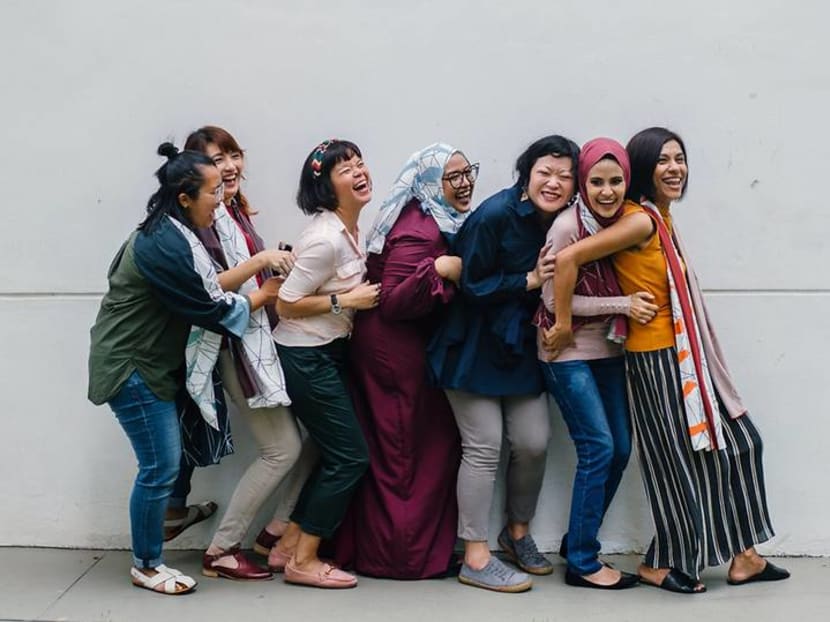
(Photo: Pexels/mentatdgt)
It'southward not like 2022 was a year without friends. We raised a toast on Zoom birthday parties, organised trivia nights on Google Run into and spent more fourth dimension than ever waiting in lines, a peachy place to make new friends.
I hateful, I made one, even. His name is Josh, and he is a author who lives in my neighbourhood. For years, he remained at that absurd-guy-I-should-definitely-get-to-know-meliorate status. Life gets in the style.
Life changed last March. With our families thrown together into a pod, Josh became a lifeline to sanity equally other friends disappeared. Nosotros fretted nigh politics while our children played hide-and-seek. Crunch created a closeness.
READ: Not interacting with co-workers when working remotely? Tips to correct that
But spending all that time with Josh also made me realise how much the rest of my social life had winnowed. Many friends vanished into pods of their own. Our mutual friend, Jay, who introduced me to Josh, disappeared into his home for the duration. I still have the souvenir-wrapped bottle of whiskey I bought for his 40th altogether, in February 2020.
Gone were the dinner parties with the couples we saw quarterly. Gone were seemingly half the parent friends from our sons' schools.
Doesn't everyone have stories similar that? For many of us the pandemic was a great social winnowing, a dent downwardly of our widest circles of friends to a skeleton crew of essentials – those who happened to exist proximate, available, in our circle of trust.
Everyone else? Well, they were all on hold until "all this is over", to cite a tired phrase.
The common assumption is that we are counting the minutes until we become back out there, to hurtle into jubilant mobs similar carnival revellers. The loftier-decibel house parties. The sweaty trip the light fantastic toe floors. Elbowing for drinks in a packed-to-the-rafters-bar. In short: People!
And for many, that is unquestionably true. Maybe not everybody. A twelvemonth is a long time. People aged, people moved. People got married, people got divorced. People inverse, people died. Along the manner, the social webs that connected u.s. were stretched to the limit.
If you lot can't get out to public places, you're non picking upward new casual friends, and the casual friends y'all already have are but going to drift off your radar.
"Everyone has inverse the way they collaborate," said Rebecca Adams, a professor of sociology and gerontology at the University of N Carolina at Greensboro, who studies peer networks.
Over the by year, she said, we stopped exploring, often limiting our rare encounters to tiny groups of trusted intimates. We didn't go new ones.
"If you can't become out to public places," Adams said, "you're not picking upwardly new casual friends, and the casual friends yous already have are just going to migrate off your radar. We don't know what the lasting issue of these social disruptions will be."
We're well-nigh to observe out. It's simply reasonable to wonder if nosotros will exist able to revive all those friendships that spent a year on hold – and if we fifty-fifty want to.
THE BACKGROUND MUSIC OF OTHER HUMANS
Call up dorsum to the fantastical Neverland of 2019. Think of the parties you went to, the gatherings, the club nights. Where are all of those people now? How much practice you miss them?
It depends on the friends, apparently. Friends more often than not fall into tiers, like the ol' food pyramid, except in this case, the tiny triangle at the pinnacle is where the good stuff is, your best friends who provide the nearly nourishment.
The broad base of the pyramid represents the acquaintances, the kinda-friends, the friends of friends and amiable whoevers that, like salted egg yolk chips or bubble milk tea, are swell simply do not make a full meal.
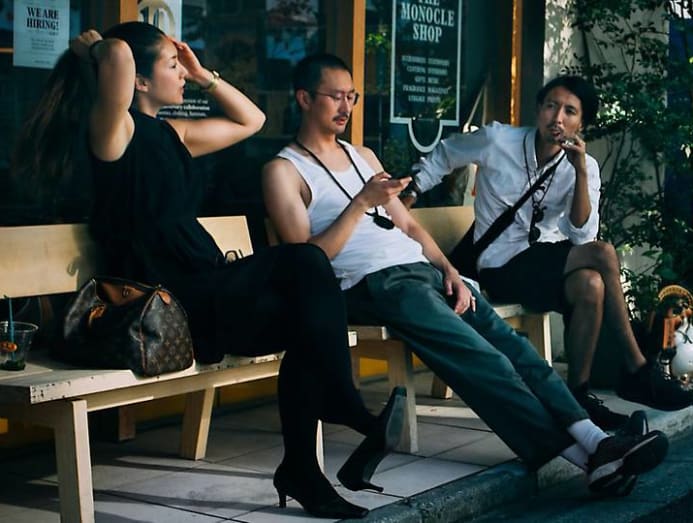
Such loose acquaintances tin be categorised as "weak tie" relationships, to summon a term coined past the Stanford University sociologist Mark Granovetter in the 1970s, as Amanda Mull wrote in The Atlantic in January. They were also the first to go during the pandemic every bit shops, restaurants and offices closed.
Mull eulogised these almost-friends who were suddenly absent from her life, "the guy who'due south ever at the gym at the same time as you lot, the barista who starts making your usual order while you're nonetheless at the dorsum of the line".
While these folks may not make information technology onto your phone, they affair in sum, Adams said. She feels information technology in her own life. Every bit a music fan, she misses the dancing crowds that used to pack into the clubs. She will venture back at some point. The scene will be different.
TOO CASUAL, Also INTIMATE, Likewise DISTANT, Too FAR
If the friendly barista is gone, another volition likely accept his identify. Merely what about second- and third-tier friends, the people you're still formal enough to email with, but non text?
The too-candid colleague yous would gossip with over drinks before she got laid off during the pandemic; the parents you lingered to talk to at school drop-off; the hilarious style victim who tagged forth to clubs.
READ: Tips – even for introverts – to find and go along new friends during the pandemic
"Coincidental friendships are based primarily on proximity and convenience, rather than a truthful connection," said Irene Levine, a sometime professor of psychiatry at the New York University schoolhouse of medicine, who writes well-nigh friendship. "They are linked to a situation."
The pandemic pods that and so many of u.s.a. created may accept been a factor. By definition, joining a pod means seeing few people outside of it.
And once inside, the pod tin can become faintly cult-like, with usa-against-the-world overtones. Y'all develop in-jokes and a shared linguistic communication. Anybody else is outside the circumvolve of trust. How careful are they? Are they prophylactic to hang out with?

The omnipresent smartphones and laptops that hold distant friends together also, paradoxically, may have helped pull them apart. Some of this was merely a numbers game. How many people can you fit onto a grouping text without it turning into chaos. Five? Seven? Non everyone will make the cut.
WHERE ARE YOUR FRIENDS TONIGHT?
But what nigh our closest friends? Shenton Mode types often talk about a "flight to quality", the trend of investors to abandon riskier, less established stocks for blue chips during a crisis.
The aforementioned might be said about friendships during the pandemic, as we winnowed our portfolio of friends downwards to known quantities.
Personal tragedy, in a twelvemonth total of them, sometimes had the same effect. "I ever kept my wider spider web around me every bit a safe net, just in example," said Amy Lin, 31, a schoolteacher in Canada.
In August, she lost her married man suddenly, to a non-COVID-related illness. In the month following her loss, Lin, said, "I had to brand very specific choices most who I spent fourth dimension with, and the people that I did spend time with have had to carry a really large weight in terms of my grief".
READ: How to deal with friendships during these hard times
That included a all-time friend who drove three hours to selection her up at the hospital where her hubby died. And the friends who walked with her in freezing temperatures when she needed to talk. She learned she didn't need that large acquaintance safety net.
"I don't know if I would have found this kind of radical friendship without these harrowing circumstances," she said. "My all-time friends just so completely showed upwardly."
THE Correct SIZE OF FRIENDS
The restaurants and bars are refilling, and COVID-nineteen cases in the community have been kept at very depression rates. Time to get the old gang back together, correct?
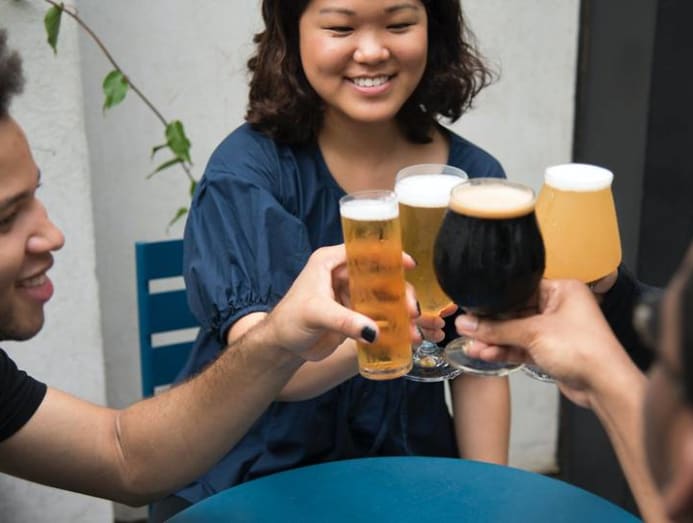
For plenty of people, certain. Merely it'due south not e'er as simple as that. "We're approaching an ending, and when people approach endings, they tend to savor instead of explore," said Laura Carstensen, a psychology professor at Stanford Academy, who founded a eye on longevity. Faced with the closing of a chapter, we tend to "focus on known people, known prospects, not on the expansive, the new. They're non thinking, 'Permit's go try out new things'".
Students and young unmarried adults, Carstensen said, are most likely to sideslip dorsum into pre-pandemic manner, collecting friends in majority to maximise their opportunities to pursue mates, build careers and observe their place in the world.
READ: How to offset a conversation about money with your friends
Others, also, learned to appreciate the elementary calm of it all. "There was finally permission from the culture at large that yous don't have to show up at everything," said Lisa Cochran, 39, an at-dwelling mother who works role-time at her husband's plumbing company in Virginia. "There's a freedom there."
Even extroverts learned lessons in pulling back. LaTonya Yvette, 31, a stylist and blogger in Brooklyn, used to hold giant parties. Just she has come to relish the intimate friendships that blossomed in the past year, including with a neighbour who sang with her every night at 7pm during the darkest days.
"I'm then thankful to have more than emotional infinite," Yvette said. "I don't see that changing. I don't necessarily want information technology to."
By Alex Williams © The New York Times
This article originally appeared in The New York Times.
https://www.nytimes.com/2021/03/27/style/coronavirus-friends-winnowing.html

Recent Searches
Trending Topics
Source: https://cnalifestyle.channelnewsasia.com/wellness/we-want-our-friends-back-but-which-ones-237831
0 Response to "Should you rebuild all the friendships you've lost during COVID-19?"
Post a Comment